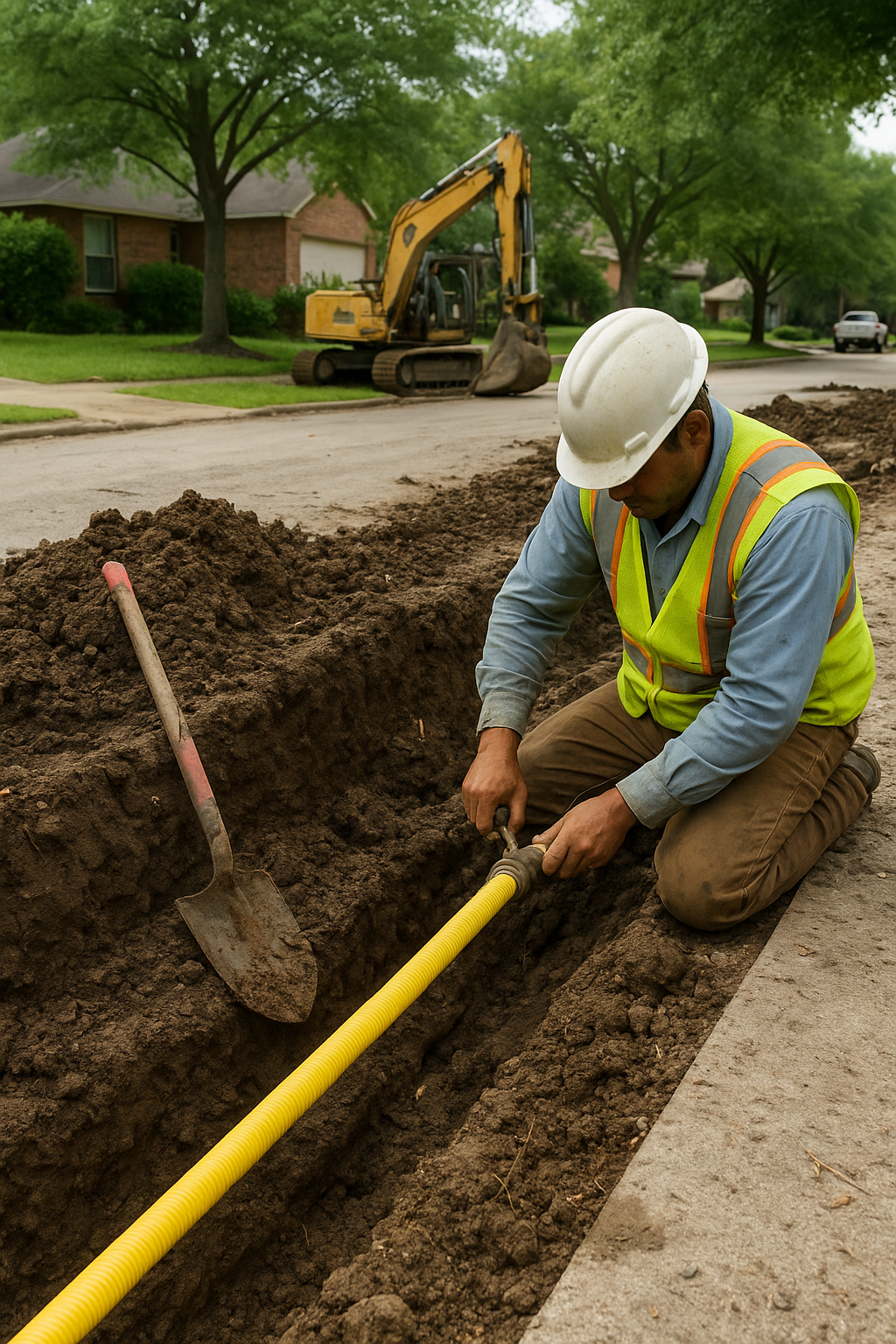
Houston's older neighborhoods like the Heights and Montrose feature many pre-1970 homes with original black iron gas lines that corrode faster in the area's humid subtropical conditions. High moisture levels combined with clay-rich soils cause ground movement that stresses rigid piping, leading to leaks at joints and fittings. Replacement often requires trenching around mature trees and existing utilities common on these lots, and crews must account for the shallow water table that can fill excavations quickly during summer rains.
Polyethylene pipe has become the standard for new underground runs because it flexes with soil expansion and resists the corrosion that affects steel in Harris County's acidic soils. Installers fuse sections with heat rather than threaded joints, reducing future leak points. In Midtown and Downtown properties with limited yard access, technicians may use directional boring to minimize disruption to landscaping and driveways while meeting local depth requirements below frost line, which is minimal here but still set to avoid surface loads.
Nearby cities like Katy and Sugar Land share similar soil and humidity challenges, yet their newer subdivisions sometimes have copper or CSST lines that need different transition fittings during replacement. Homeowners in Pearland often face additional coordination when lines cross shared easements or run near irrigation systems. Proper sizing for modern appliances, including tankless water heaters now common in River Oaks remodels, prevents pressure drops that older lines cannot support.
Permits through the City of Houston or Harris County are required for any line work exceeding certain lengths, and inspectors check for correct burial depth and tracer wire installation. Skipping these steps risks future issues when selling a property or during heavy rain events that expose shallow lines.
Technician insight
In Houston the thing that catches most people out with gas line replacement is how fast clay soil around the Heights and Montrose shifts after a heavy summer rain, cracking old steel joints that looked fine during the dry months. Homeowners often assume a small leak is just at the appliance, but once we expose the line the whole run needs attention because the humidity accelerates corrosion underground.
Montrose Duplex Line Failure
A duplex in Montrose reported low pressure on one side after recent rains. Excavation revealed a cracked steel joint where shifting clay had stressed the line. The crew replaced the full run with fused polyethylene at proper depth, restored the yard, and confirmed steady pressure to both units without further leaks.
Gas Line Replacement Services We Offer
✓Polyethylene Gas Line Installation
Installs flexible PE piping that withstands Houston's shifting clay soils and resists corrosion from high humidity better than older steel.
✓Black Iron Pipe Replacement
Replaces corroded rigid steel lines common in Heights and Montrose homes with new black iron where above-ground or short runs are needed.
✓Underground Gas Line Relocation
Moves existing lines away from new construction, pools, or tree roots while maintaining proper depth in water-prone Harris County soils.
✓CSST to PE Conversion
Updates yellow CSST tubing found in some Sugar Land and Katy homes to durable polyethylene for improved safety and longevity.
✓Multi-Unit Gas Line Replacement
Handles shared lines serving duplexes and small apartments in Midtown where access and shutdown coordination add complexity.
Gas Line Replacement Cost in Texas
| Service | Typical Range | What Affects It |
|---|---|---|
| Short residential replacement under 50 feet | $1,200–$2,200 | Higher in dense Montrose lots with limited access |
| Standard 50-100 foot run | $2,000–$3,800 | Varies with clay soil depth and tree roots |
| Directional boring add-on | $800–$1,600 | Used in Heights and River Oaks to protect landscaping |
| Multi-appliance tie-in | $300–$600 | Common when adding tankless water heaters |
Ranges are typical for Texas and confirmed with an exact written quote before any work starts.
How it works
- 1
Site Assessment
Technician locates the existing line, checks soil conditions, and measures distance and depth needed in the specific Houston neighborhood.
- 2
Permit And Planning
Obtains required permits and maps utilities before selecting pipe material suited to local clay soils and humidity exposure.
- 3
Trenching Or Boring
Excavates or bores the new path while managing groundwater common in Harris County during summer months.
- 4
Installation And Testing
Lays and fuses new pipe, connects to meter and appliances, then pressure tests before backfill and restoration.
Pricing
Costs depend on line length, depth, soil conditions, and whether boring is needed instead of open trench.